When creating an account on a social media platform, gaming service, community app, or website, you may notice that there are two different names associated with your profile: a display name and a username.
Although they can look similar, they serve different purposes. Your display name is usually the name other people see when they visit or interact with your profile, while your username is often a unique identifier used to find, mention, or directly access your account.
Understanding the difference can help you choose names that are easy to recognize, search for, and remember. It is especially useful if you are creating a stylish online identity and want the same general name across multiple platforms.
What Is a Display Name?
Read also: → Discord Names: 280+ Stylish Username & Display Name Ideas
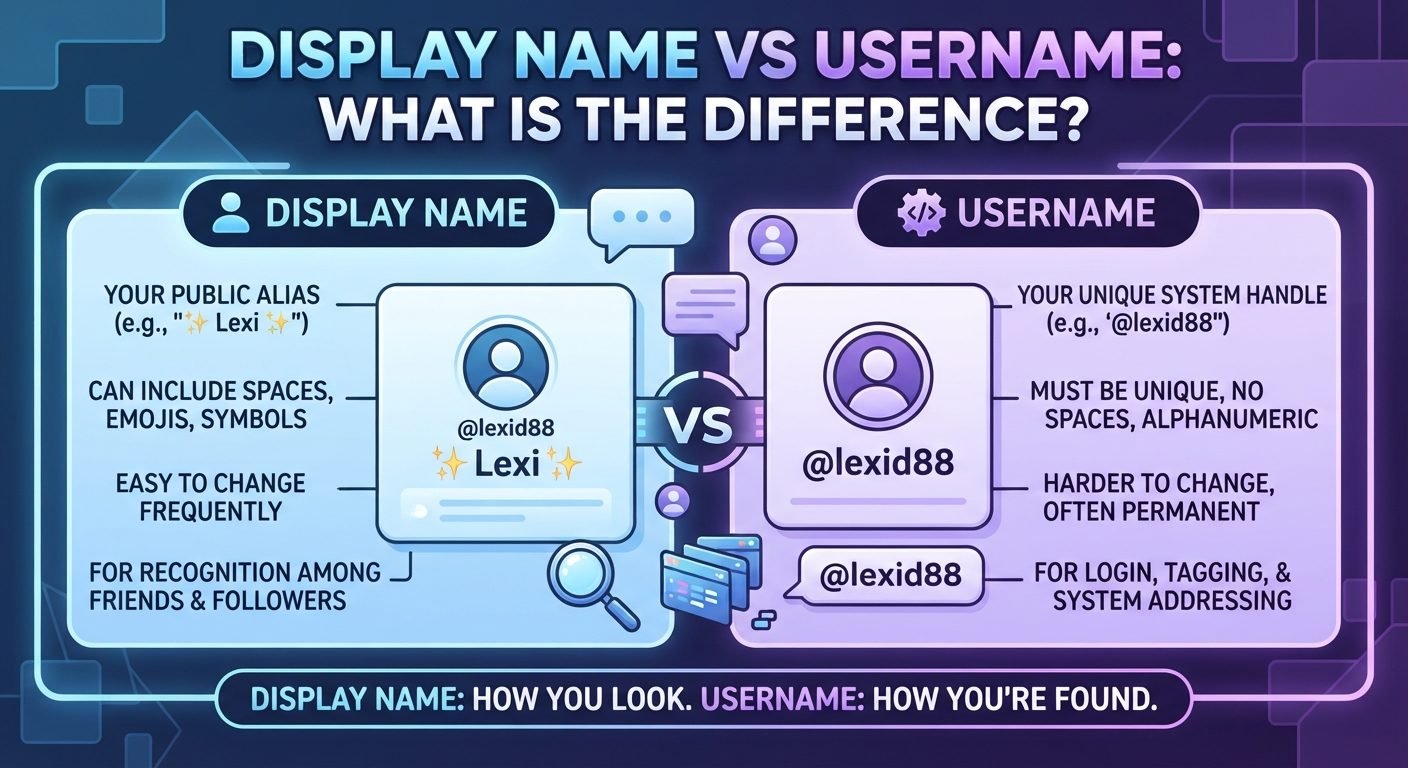
A display name is the name shown publicly on your profile. It is generally designed for people to read rather than for the platform to use as your unique account identifier.
For example, imagine someone creates an account with the username:
@ShadowNova482
Their display name could simply be:
Shadow Nova
The display name is often more flexible than the username. Depending on the platform, it may allow spaces, capital letters, symbols, emojis, or decorative characters.
The exact rules vary from one service to another, but the basic idea remains the same: the display name represents how your account appears to other users.
Where You Might See a Display Name
A display name can appear in several places, including:
- Your profile page
- Comments
- Posts
- Messages
- Community discussions
- Friend or follower lists
- Gaming profiles
- Search results
- Notifications
Because people usually see it more often than the underlying account identifier, a display name can be an important part of your online identity.
What Is a Username?
A username is an account identifier assigned to your profile. Unlike a display name, it is commonly required to be unique within a platform.
For example:
Display name: Shadow Nova
Username: @shadow_nova482
Another person might also use the display name Shadow Nova, but they generally cannot use the exact same username if the platform requires usernames to be unique.
Usernames are often used for:
- Finding a specific account
- Tagging or mentioning users
- Creating profile links
- Logging into certain services
- Connecting with other users
- Identifying an account internally
The rules for usernames are usually stricter. A platform might limit the characters you can use, prevent spaces, require a certain length, or restrict special symbols.
Display Name vs Username at a Glance
The easiest way to understand the difference is to think of a display name as your public-facing name and a username as your account identifier.
| Feature | Display Name | Username |
|---|---|---|
| Main purpose | Represents you publicly | Identifies your account |
| Usually unique | Not always | Often required |
| Spaces | Often allowed | Often restricted |
| Symbols | May be allowed | Usually more limited |
| Decorative fonts | Sometimes supported | Often restricted |
| Used for mentions | Sometimes | Commonly |
| Used in profile links | Less common | Common |
| Can often be changed | Yes | Depends on platform |
| Main focus | Readability and identity | Identification and search |
These are general differences. Individual platforms can use the terms differently or combine some of their functions.
Why Can Two People Have the Same Display Name?
One of the most common reasons for confusion is seeing multiple accounts with exactly the same display name.
For example, three different users might all call themselves:
Alex Morgan
Their usernames could be:
@alexmorgan24@alex_morgan88@alexmorganofficial
The display name tells you what each person wants to be called, while the username helps distinguish their accounts.
This is why searching only by display name can sometimes produce multiple results. The username provides a more specific identifier.
Why Are Usernames Usually Unique?
Platforms use usernames to distinguish one account from another.
If two accounts could have the exact same username, it would become difficult to identify the correct account when someone wants to mention or visit it.
For example, suppose two users could both have:
@coolplayer
A platform would have difficulty deciding which account should receive a mention when someone types @coolplayer.
Requiring unique usernames solves this problem.
The display name does not usually have the same requirement because it is intended to be a readable name rather than a unique account key.
Can Your Display Name and Username Be the Same?
Yes, when the platform's rules allow it.
For example:
Display name: Nova
Username: @nova
This can create a very clean profile because the two names match.
However, short usernames are often already taken. You might therefore need to use a variation such as:
Display name: Nova
Username: @nova_play
This still allows your public identity to remain simple while giving the platform a unique identifier.
Which One Should Be Stylish?
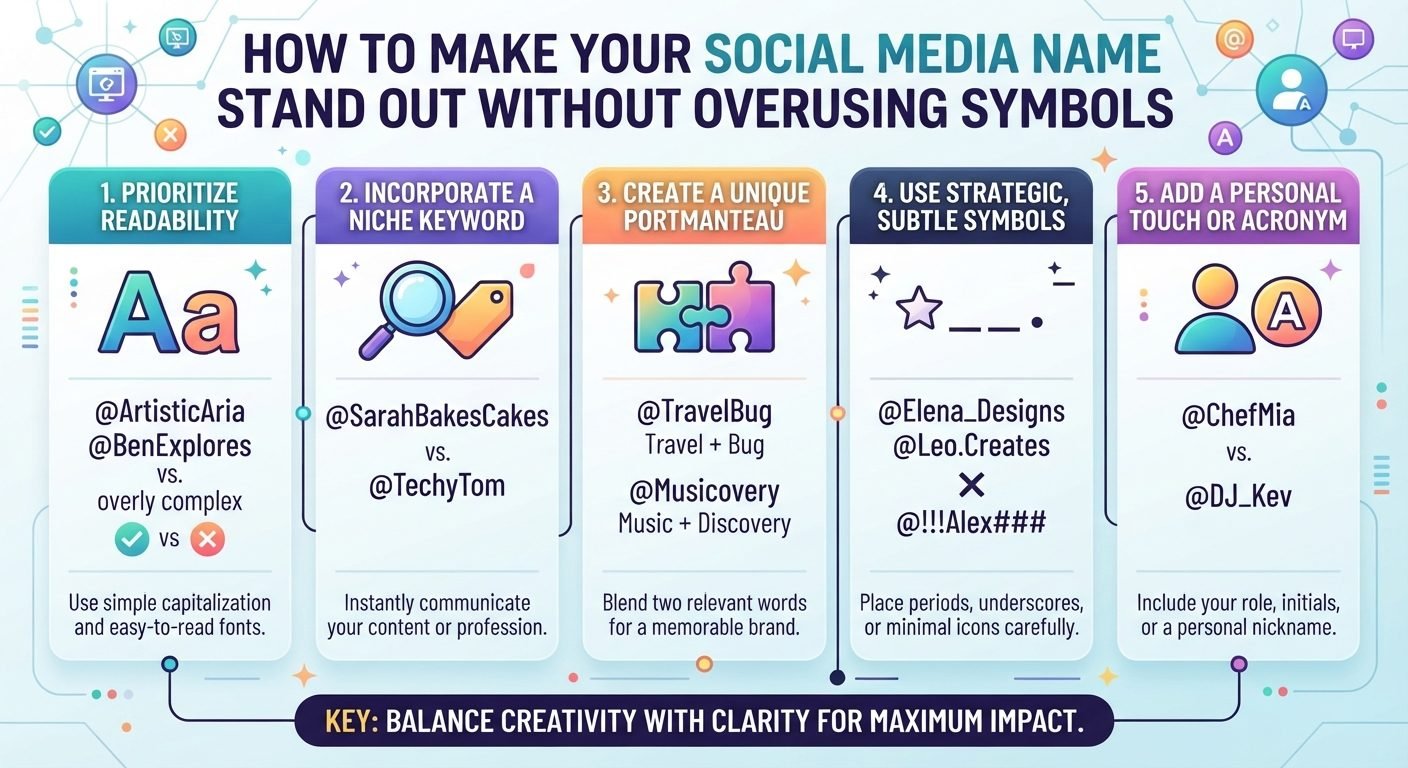
If you are interested in creating a stylish online identity, the display name usually gives you more creative freedom.
For example, you might use:
Display name: 𝑺𝒉𝒂𝒅𝒐𝒘 𝑵𝒐𝒗𝒂
while keeping your username simple:
@shadow_nova
This combination can work well because the display name provides the visual style while the username remains easy to type and search.
However, not every platform supports decorative Unicode characters equally well. Some may display them correctly, while others may replace them with boxes or other unexpected characters.
Why a Simple Username Can Be Better
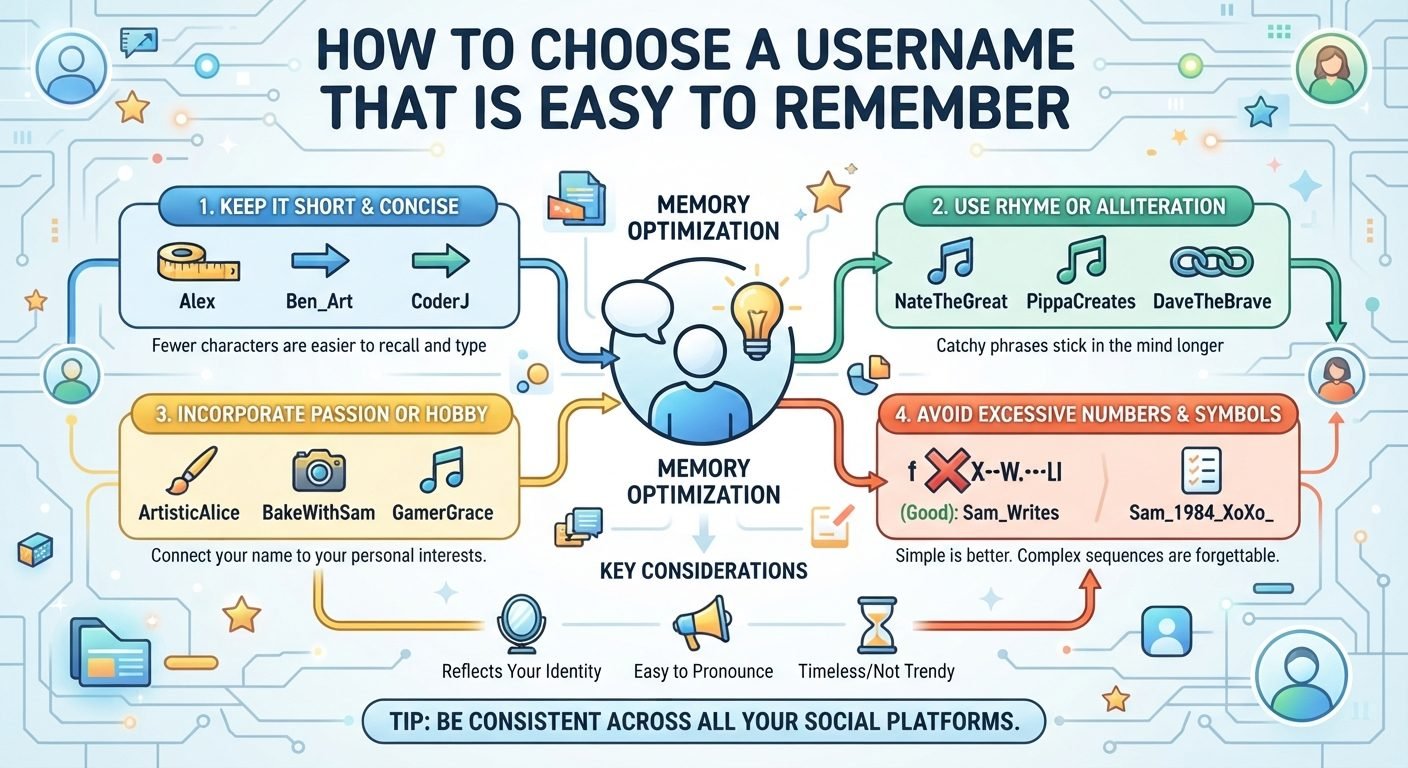
A stylish display name can look attractive, but a username is often more useful when it is simple.
Consider the difference between:
@shadow_nova
and a username containing several unusual symbols and decorative characters.
The simpler version is easier to:
- Type
- Remember
- Search
- Tell someone verbally
- Include in a message
- Recognize across platforms
This is particularly important if you want people to find you easily.
A good strategy is to use creativity where the platform allows it without making the account difficult to identify.
Usernames Are Better for Consistent Identification
A username becomes particularly important when you want people to find the correct account.
Suppose your display name is:
Alex
That name could belong to thousands of accounts.
But a username such as:
@alexcreates
is more specific.
If you use the same or a similar username across several platforms, people may also have an easier time recognizing your account.
For example:
@alexcreates@alexcreates_@alexcreatesart
Even when the exact username is unavailable everywhere, maintaining a recognizable base name can help create a consistent identity.
Can You Change a Display Name Without Changing Your Username?
On many platforms, yes.
This is one of the useful differences between the two.
Imagine your username is:
@nightfox21
You might change your display name from:
Night Fox
to:
Night Fox Gaming
without changing the underlying username.
This can allow you to update your profile's appearance while keeping the same account identifier.
However, the exact rules depend on the platform. Some services may limit how frequently names can be changed or apply different restrictions to usernames and display names.
Can You Change Your Username Without Changing Your Display Name?
Some platforms allow this as well.
For example, you might have:
Display name: Night Fox
Username: @nightfox21
Later, you could change the username to:
@nightfoxgaming
while keeping the display name as Night Fox.
This can be useful when you want to update your account identifier but keep your recognizable public name.
Before changing a username, it is worth checking how the platform handles old profile links, mentions, search results, and account history.
How Usernames and Display Names Work Together
The strongest profiles often use both names intentionally.
Think of them as two parts of the same identity.
The display name should communicate who you are or what your profile represents.
The username should make the account easy to identify and find.
For example:
Display name: Pixel Knight
Username: @pixelknight
Or:
Display name: 𝑷𝒊𝒙𝒆𝒍 𝑲𝒏𝒊𝒈𝒉𝒕
Username: @pixel_knight7
The first name provides personality, while the second provides a practical account identifier.
Should You Use Numbers in a Username?
Numbers can be useful when your preferred username is already taken.
For example:
@pixelknight
might already belong to someone else, so you could consider:
@pixelknight7
or:
@pixelknight24
Try to avoid adding a long random sequence unless there is a reason for it.
A short, meaningful variation is generally easier to remember than a username filled with unrelated numbers.
What About Symbols?
Symbols can make names more distinctive, but their usefulness depends on where they are used.
A username may have strict rules about symbols, while a display name may allow more options.
For example:
Display name: ★ Pixel Knight ★
Username: @pixelknight
This approach separates decoration from identification.
If a platform supports symbols in usernames, check whether those symbols can actually be typed and searched reliably before using them.
What Happens When Someone Mentions You?
Mentions are often connected more closely to usernames or handles than display names.
For example, if your profile looks like:
Display name: Shadow Nova
Username: @shadow_nova
someone may type @shadow_nova when mentioning you.
The display name helps other people recognize who the account belongs to, while the username identifies the exact account the mention should reach.
The exact behavior depends on the platform.
Which Name Should You Put in Your Profile Bio?
If your profile already displays both your name and username automatically, you may not need to repeat them.
However, if you are directing people from another website or platform, your username is often more useful because it gives people a specific way to find you.
For example, a bio could simply say:
Shadow Nova
Gaming and creative content@shadow_nova
This keeps the profile identity clear without making the page unnecessarily complicated.
What If You Want the Same Name Everywhere?
Start by choosing a strong base name before adding decoration.
For example, suppose your base identity is:
Pixel Nova
You could use:
- Display name: Pixel Nova
- Username:
@pixelnova - Gaming name: PixelNova
- Creative profile: Pixel Nova ✦
If the exact username is unavailable, choose a consistent variation instead of creating a completely different identity on every platform.
The goal is not necessarily to make every account identical. It is to make the relationship between the accounts easy to recognize.
A Simple Way to Choose Both Names
You can create your display name and username in a few steps.
Step 1: Choose Your Base Name
Start with a short name, nickname, word, or combination that represents you.
Step 2: Create the Username
Turn the base name into a simple account identifier.
For example:
Base: Pixel Nova
Username: @pixelnova
If it is unavailable, consider a small variation.
Step 3: Design the Display Name
Use the display name to add personality.
For example:
Pixel Nova ✦
or simply:
Pixel Nova
Step 4: Check Readability
Look at the names on both desktop and mobile screens.
Make sure the text remains recognizable when it is small.
Step 5: Check How Others Find You
Search for your username and make sure it is easy to distinguish from similar accounts.
Step 6: Keep the Identity Consistent
If you use the account professionally, creatively, or for gaming, try to maintain a recognizable base name.
Which field does what, on each platform
The distinction is not cosmetic: one field identifies your account to the system and the other is a label other people read. Platforms differ in what they call them.
| Platform | The identifier | The label people read | Can two accounts share the label? |
|---|---|---|---|
| @username, unique, used in mentions and the profile URL | Name field | Yes | |
| TikTok | @username, unique, used for search and tagging | Nickname | Yes |
| Discord | Username, unique, lowercase | Display name, and a nickname per server | Yes |
| Telegram | @username, optional and unique | First and last name | Yes |
| Snapchat | Username, unique and effectively permanent | Display name | Yes |
| Phone number | Display name, 25 characters | Yes | |
| Roblox | Username, letters, numbers and underscores | Display Name | Yes |
This is why a styled name never breaks your account: styling lives in the label, while mentions, search and your profile link all run on the identifier underneath.
Read also: → Social Media Names Hub — the rules for every platform
Frequently Asked Questions
Is a display name the same as a username?
No. A display name is generally the public name shown on your profile, while a username is typically a more specific identifier for your account.
Can two people have the same display name?
Usually, yes. Many platforms allow multiple users to choose the same display name.
Can two people have the same username?
On platforms that require unique usernames, no. Each username must identify a different account.
Which one should be more stylish?
The display name is usually the better place for creative formatting because it is intended to be read by other people. The username is generally more useful when kept simple and recognizable.
Should my display name and username match?
They do not have to match, but using the same or a closely related base name can make your account easier to recognize.
Read also: → Best Roblox Display Names: 500+ Cool, Cute & Stylish Ideas